Monday, January 30, 2012

Everyone Makes Mistakes

My first is allowing a month to go between posts o_0

Anyways, I'm currently reading a book that my friend suggested called "The Seven Daughters of Eve." It's a non-fiction (which I don't normally do, so watch out y'all!) about the genetic history of humans and how we can all be traced back hundreds of thousands of years to seven women. I've been a slow reader lately, so I'm only in the first couple of chapters which is spent familiarizing the reader with the basics of genetics, PCR, and the like. Obviously, the story made it's way to Watson and Crick. Now, being an educated kid of the 21st Century, I've always heard of Rosalind Franklin's contribution to the discovery of DNA's double helix shape. I therefore, fully expected to see her name somewhere in the chapter.


Imagine my surprise when Franklin's name didn't show up at all. I even waited until the end of the chapter to get really disappointed. I went as far as to look at the publication date, thinking perhaps the book was written before Franklin was commonly spoken about in Biology classes. Nope, the book was published in 2001, around the time I started to hear about her.

Was it a missed piece of info? Did the author genuinely feel it wasn't important to the story? Perhaps, but given the extreme detail in these chapters, I was shocked that she wasn't even haphazardly mentioned. Maybe I'm the only one who thinks it's a mistake, but that's my two cents. Other than that, I'm really enjoying the book. It's a rare occasion to go over genetics in such a chill manner. Bravo!

Thursday, January 5, 2012

What I've Learned...

Merry Christmas/Happy Hanukkah/Happy Kwanzaa/Happy New Year! Wishing everyone a wonderful 2012 filed with everything your hearts desire.

I've had a nice winter break...relaxing mixed with seeing family, friends, and a little trip to New York. This was my second time in the city, and what else would three scientists-in-training do but visit the American Museum of Natural History? This was my second visit to the museum, and my second visit to the Ocean Hall, but it was so much fun with my friends. Nothing says marine biology like two grown women crawling on the floor to play with the interactive tree of aquatic vertebrates.

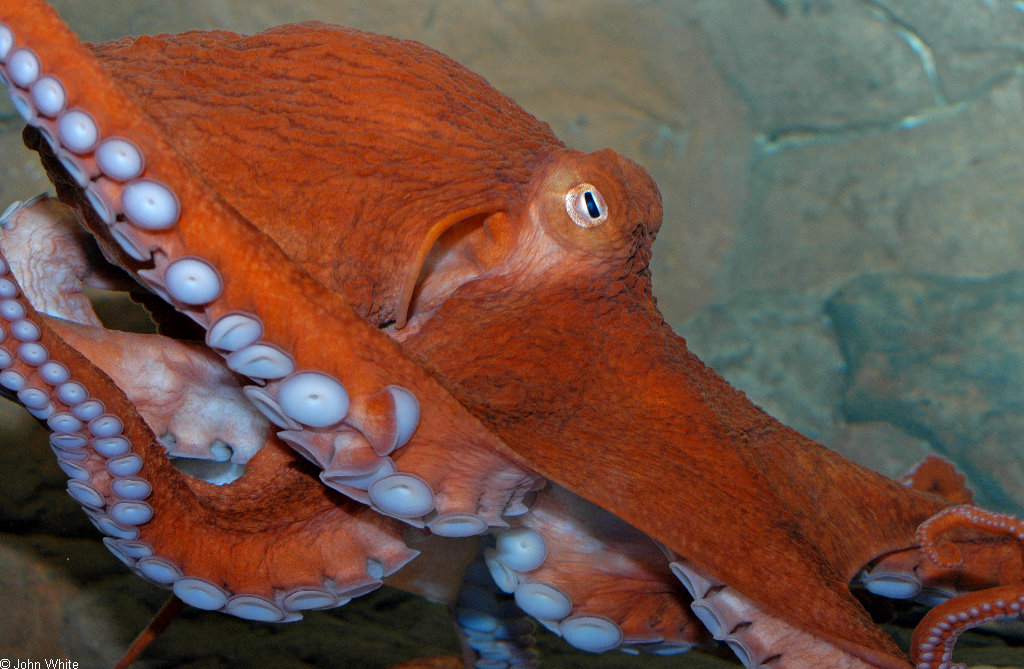
I didn't complete my usual trip to the Smithsonian Museum of Natural History, but I did visit the zoo today. I honestly don't remember the last time I've been there, and this was the perfect time to go with the lack of tourists. Of course, my first stop was at the Invertebrate House to see the new octopus and made my way to other areas such as the Big Cat area and the Asia Trail. So overall, what have I learned?

1. While organisms like sponges lack a nervous system, they still have intracellular communication (courtesy of AMNH)
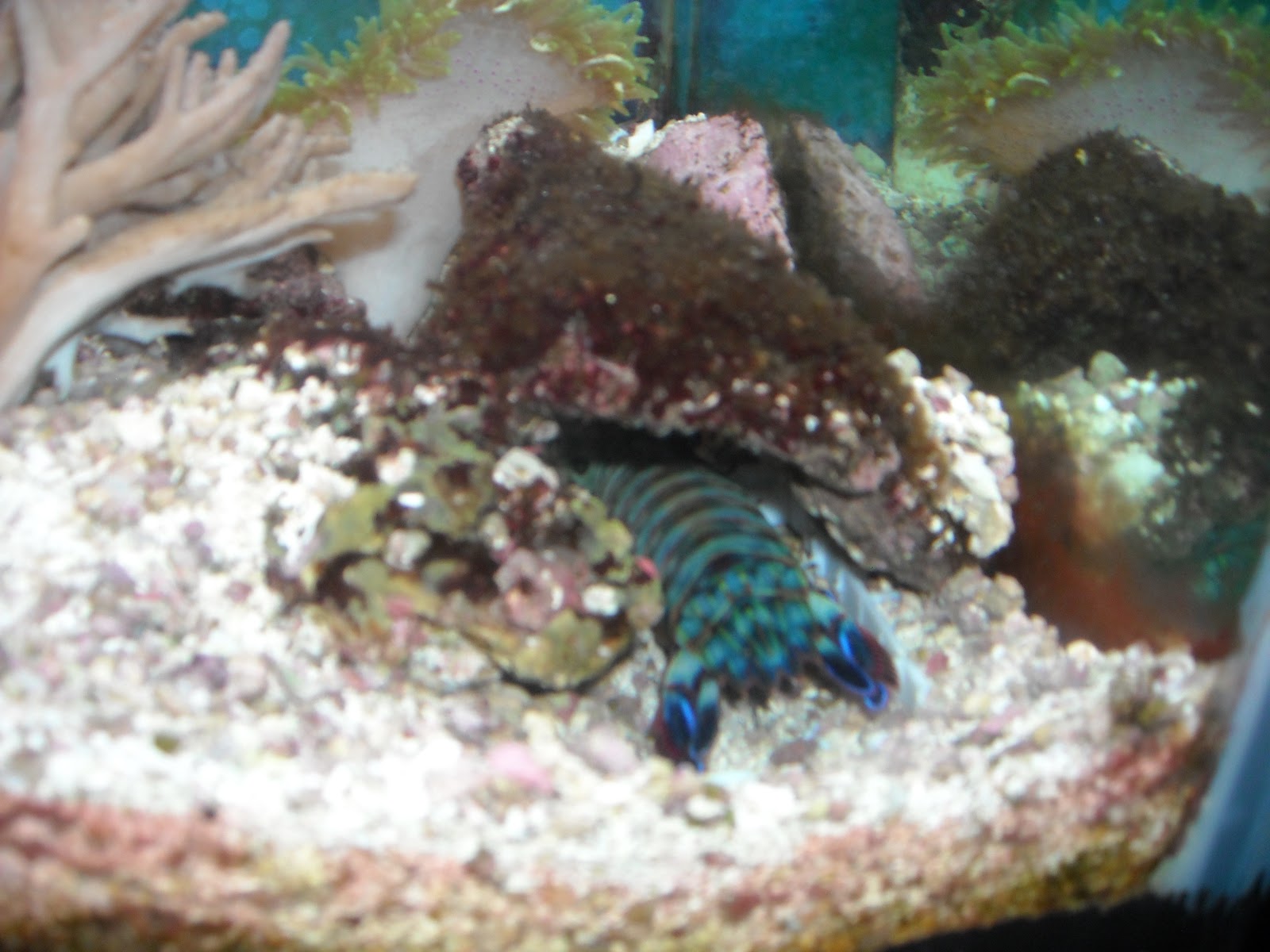
2. Snapping shrimp are larger than I thought they were (courtesy of zoo)
3. Sapping shrimp do not mess around! I could hear the popping loudly through the aquarium glass (courtesy of zoo)

I'm gonna count those as my facts of the post and leave a couple of pictures from the zoo.

How rude!
Say hello to Pandora!

Thursday, December 29, 2011

Money makes the world go 'round

I'm an odd human. Sometimes I lounge with my computer and get nothing accomplished. Five hours after dropping my bum on the couch and I still feel stressed about everything I have to do (However, I usually have acquired a wealth of "useless" knowledge, courtesy of Wikipedia). Other times, such as half the time I've been sitting at home over this break, I get an uncommon amount of work done. As the new year dawns on me, one big thing on my mind is money...and isn't that the case for many fellow scientists? At most points in our career, money will be an issue. Scholarships, grants, fellowships, assistantships, some other "ship" word I don't even know about yet. Even the best and most successful researchers need to write grants to run their awesome research.

2012 is bringing with it many financial issues (not necessarily bad ones, just ones that I need to deal with), and for some reason I've been pretty on top of dealing with them. My first financial responsibility is my first conference! I plan on attending a meeting in NC this spring. I'll have the chance to present my research to other students and professional scientists (hopefully as a presentation) and meet new people. With this exciting prospect comes the need for funds - funds for the registration fee, gas money, meals, any socializing, etc. Luckily, there are many options to fund conference trips, especially for students. I recently learned that there are some funds in the grant that supports my assistantship for a conference, which I know I am so lucky to have. There are usually other sources of cash - in my case, I can also apply for grants from the graduate school, the graduate student association, my program's grad student association, and the society itself. Even if you can't get your entire trip covered, grants can take a good chunk out of your expenses, especially if you're giving a talk or presenting a poster.

The other thing I have to prepare for....finding funds to support myself during my last year of grad school. Yes, often good things come to an end (Not always, however. What a stupid quote. Anyways...) and my research assistantship will be up this summer. I have some options. The one I'm working on right now is finding fellowships and scholarships to apply for. This is proving difficult mainly because many fellowships set you up with a project or location. I have a project...I just need money to live :( My other option is going back to a teaching assistantship. I would love this option, but would then be without funding for two months. I went through that this year and let me tell you, not fun at all (I luckily had money set aside but that meant putting off a car purchase...bummerrr).

Anyways, that's my way of being productive without physically being at the lab. Oh! I can't forget updating my poster for the Graduate Poster Session next month. Man, it's gonna be a busy year.

Fact of the Post: One of the many reasons I love the tiny country of Belize: the Wildlife Conservation Society has concluded that fishing closures in Belize has helped increase predatory fish populations such as barracuda and groupers. Herbivorous fishes such as parrotfish, however, have not been as successful. But no worries! The Belizean government has recently placed a nationwide ban on parrotfish fishing. The restoration of such species may help coral reefs recover (herbivorous fishes can take care of the algae that has taken over many reefs).

I'm back baby!

Friday, December 23, 2011

Knowledge all around

My friends and I have a "Wednesday Night Book Club", one night a week that we've set aside to read, chat, and enjoy each other's company. One friend brought up the topic of knowledge and learning. She stated that she loves the fact that one can never stop learning; there will always be something new to discover. I got so excited because that was the first time someone verbalized what I've always felt.

I love to learn. Yes, I'm a nerd. I often watch the Discovery Channel, the History Channel, Animal Planet. I regularly visit museums, aquariums, and science centers. I can spend hours on the computer reading random Wikipedia pages. Sometimes it's overwhelming to think about all the information out there. And it's a good overwhelming. I'll never run out of things to learn, and that's the most amazing thing ever.

I feel that's what drew me into the science field. We'll never reach a point where we know everything. Especially in marine science. We've only started to scratch the surface of what we know about the marine realm. It's a field where you can be the one to make new discoveries every day, and who doesn't grow up wanting to discover? Who doesn't want to say "Yes, the world knows this now because of me."

Fact of the Post: More of an announcement....the National Zoo in DC is now home to a Giant Pacific octopus named Pandora! Excuse me while I run over to meet him!

I'm a curious one!

Friday, December 16, 2011

The Second Time Around

So I finished my first semester as a second year grad student. The overall tone was initially stressful, but in the end it was a great improvement over last year.

- It took longer than I anticipated to complete my thesis proposal due to some conflict within my committee (one person wanted far more detail than what the rest of us felt was needed for a proposal; although this person made excellent points which I plan on addressing by the time I defend)
- I was down to one class (Toxicology - no lab) and a seminar (Speciation/Evolution). I expected to really enjoy my seminar and just get through Tox....ended up completely switched. I loved Tox, and I'm glad that I've chosen a career that I'm genuinely interested in. Seminar became a bit more of a chore, but it was still a very valuable class and I'm glad I took it.
- I have been able to get involved in my program in new ways, mainly sitting in at prospective student lunches. I love getting to know possible future students and sharing my experiences and why I love my program.
- I'm now the one looking at the first years and giggling to myself, knowing that no matter how hard it gets they'll survive just like we all did.
- I presented my first real poster at my program's research colloquium. I received excellent feedback and was able to share my work with others.
- I have completed about 1/3 of my project; I has data!
- Getting through club drama :(

Looking forward to next semester...
- Presenting another poster at the graduate poster session held by the entire graduate school.
- Presenting at a CONFERENCE!!!
- Taking invertebrate zoology
- Figuring out how to finance my last year of grad school (I wouldn't mind teaching again!)
- Becoming a dog sitter with my roommies! I'm already in love with the bulldog we'll be caring for
- Trying to fix mentioned club drama

Last but not least, marvel at my amazingly dorky oceanography stickers, courtesy of my friend/Secret Santa!

Fact of the Post: From WhySharksMatter at Southern Fried Science - 1 out of 6 of the species featured in "Finding Nemo" are threatened with extinction.

Maybe Disney should add that in the bonus features...

Thursday, December 15, 2011

In my closet

This subject has come up time and time again. For a wonderful cover on the topic, check out Dr. Bik's blog post in DeepSeaNews. But I thought I'd give my personal perspective on......fashion in the lab.

I grew up in DC, where my idea of a successful adult was largely molded by the suits and lavish two-piece outfits on Capitol Hill. I knew that when I grew up, I too would wear beautiful blouse, tailored pants, cute skirts, and heels....heels for days! However, my love of science began early, and soon my dreams of cute outfits diminished to socially acceptable duds that wouldn't get destroyed in the field or around chemicals in a lab. The more I feel like an adult though, the more I start to wonder why I can't still be the fashionista I envisioned - just the scientist edition.

By all means, if you're most comfortable in jeans and a tee, go for it, especially in my environment. I definitely wouldn't dress up for the field - that's beyond impractical. In that case I'll break out my Keens! But I'm very much a "dress to impress" type of gal. I try to look pulled together for classes and work (OK, so sometimes I get lazy, like on weekends when I'm the only person in the lab or going in for a final). I was taught to dress properly when visiting the house of the Lord, and while I've downgraded to jeans for church, I still feel a need to dress them up so it looks like I put some sort of effort into my appearance. I see a bit of this in my lab, but more often than not it's jeans or shorts and a tee. But I encourage anyone else who likes to put together outfits on a daily basis to go ahead, build up a cute wardrobe and share it with the world! Even if half the time I just end up sharing my growing sense of style with baby clams :/

As a random example, I would love this top:

Old Navy....hey, I'm on a RA salary here.

and a white sweater in case it's chilly, with black trousers or my dark wash trouser jeans.

Old Navy

Maybe finish off the look with some sparkle?

Payless.

Anyways, that's my goal. As I'm now halfway through my program and am starting to think seriously about conferences and jobs, not only will I be armed with awesome interview/first impression attire, but I'll feel comfortable and invincible in them :)

Fact of the Post: A Science article I recently read for my seminar concluded that the beloved Triceratops is actually the juvenile of another dinosaur species.

Goo goo gah gah

Thursday, December 1, 2011

Interns anyone?

So I just realized that I never got to writing about the almighty internship...

Internships are important. They expose you to the field and the people in that field. They give you real experience and a chance to see the good, bad, and ugly of your career path. They let you decide if you're making the right move, or if you should tweak your plans. They allow you to meet people who can be very helping late on - besides the coveted recommendation, they can give you advice and serve as a guiding hand. Even one good internship will do a lot for you, both on your resume and for memories that will last a lifetime! (OK I'm done with the cheesiness). So, the good, bad, and ugly of my internships from the college days.


Education intern at an aquarium
The good: made wonderful friends, got some experience in public education, developed my love of fish, learned a lot, played with dolphins!, discovered I can be a great teacher (pre-TA), worked on my public speaking skills, saw that spark of interest/amazement in children every day, took on a fear head on (I had to hold a giant millipede and stand next to hissing cockroaches for an hour...and I survived!)
The bad: dumb adults (and by dumb I mean disrespectful of the animals and of us) and children that were out of control and required us parenting them....sorry, not my job, I'm not the one who birthed them.
The ugly: unpaid (I also had a real job to get by), the aquarium was an hour away and I didn't have a car at the time...that meant getting up before 6am to make it to work before 9 (it's bad when 8am is sleeping in)

REU Intern (REU = research experience for undergraduates)
The good: got real experience working in the lab, made more wonderful friends, took a step in getting comfortable being away from the family (this was the first summer I spent away from home), eventually got a publication out of my work, made lots of contacts which led to (what I assume were) awesome recs for grad school, got dirty out in the field, GOT PAID WOOOO
The bad: Spending 24/7 in the lab at one point to finish my work (OK, 8am-6pm, but having the lights cut out on you is damn depressing)
The ugly: Again, didn't have a car at this point, so my independence was limited

Yes, sometimes internships suck, but as you can see, in a successful internship the good outweighs the bad. And if it ends up sucking....well, I still consider that a success. You now know you don't want that career and you can change gears without too much loss. Perhaps it means an extra year of school, but that's better than realizing this after working for years and then having to go back to school. So get out there, get some experience, explore, and have fun!

P.S. REUs are amazing, and they're all over the country. Check out this site; most cater to minorities in science (of both race and sex) and/or people without prior research experience. The link I posted is specifically for ocean sciences, but they come in many other flavors: chemistry, engineering, earth science, etc.

Fact of the Post: Notre Dame researchers have determined that the act of walking through a doorway decreases your ability to remember things. Gahhh that's why I forget what I'm doing when I walk into another room!

He's probably thinking "Who the hell is she?!"